Panama Investment Immigration
Migration Program Details & Application

Program Overview
Project Description
• Policy nature: The “Qualified Investor Scheme” framework was established under Administrative Decree No. 722 of 2012. Decree No. 193 (effective in October 2024) lowered the real estate investment threshold from US$500,000 to US$300,000. Amendment No. 299 of 2025 introduced a three-in-one identity system of “permanent residency + local ID + travel passport”. The travel passport can cover more than 140 countries (including the EU Schengen Area, the UK, Japan, Singapore, etc.). At the same time, the citizenship policy has been opened in the past two years.
• Application Pathways: There are three official channels for "Qualified Investor" status: ① Real Estate Investment Immigration (US$300,000): Purchase compliant real estate in Panama (new homes/second-hand homes/land/commercial properties are all acceptable) and hold it for at least 5 years; ② Securities Immigration (US$500,000): Purchase securities listed on the Panama Stock Exchange and hold them for at least 5 years; ③ Certificate of Deposit Immigration (US$750,000): Deposit the equivalent value of assets in the National Bank of Panama as a time deposit with a lock-up period of no less than 5 years.
• Note on property type: Both owner-occupied and commercial properties are acceptable. Purchasing a regular, unregistered property, even if the value exceeds $300,000, will not meet the permanent residency application requirements. You must choose an "immigrant-class property" certified by the Panamanian Immigration Service.
• ID Card Usage: The Panamanian ID card obtained simultaneously is only issued to qualified investors and can be used to open accounts at local banks in Panama (no passport information required), which helps to achieve cross-border asset isolation and risk avoidance on a global scale.
• Pathway to Citizenship (Passport): After holding permanent residency for 5 years and meeting the residency requirement of "entering Panama once every two years," you can apply for Panamanian citizenship (passport). A full Panamanian passport grants visa-free access to 150 countries and regions. Alternatively, you can obtain EU citizenship more quickly through the "Spanish Citizenship by Residence after 2 Years" pathway (with a bilateral agreement with Spain). It is recommended to have a stable record of living in Panama (such as bank statements, utility bills, or proof of a fixed monthly income) before submitting your citizenship application.
• E-2 Treaty Investor Pathway (Multiple Steps to the US): After three years of citizenship, Panamanian citizens can apply for a US E-2 Treaty Investor visa, allowing their entire family to reside, work, and attend public primary and secondary schools in the US long-term. Compared to directly applying for an EB-5 immigrant visa, the E-2 visa has a minimum investment threshold of $200,000, a shorter processing time of approximately three months, and no quota restrictions or waiting lists, making it a viable alternative for "indirectly accessing the US."
• Policy nature: The “Qualified Investor Scheme” framework was established under Administrative Decree No. 722 of 2012. Decree No. 193 (effective in October 2024) lowered the real estate investment threshold from US$500,000 to US$300,000. Amendment No. 299 of 2025 introduced a three-in-one identity system of “permanent residency + local ID + travel passport”. The travel passport can cover more than 140 countries (including the EU Schengen Area, the UK, Japan, Singapore, etc.). At the same time, the citizenship policy has been opened in the past two years.
• Application Pathways: There are three official channels for "Qualified Investor" status: ① Real Estate Investment Immigration (US$300,000): Purchase compliant real estate in Panama (new homes/second-hand homes/land/commercial properties are all acceptable) and hold it for at least 5 years; ② Securities Immigration (US$500,000): Purchase securities listed on the Panama Stock Exchange and hold them for at least 5 years; ③ Certificate of Deposit Immigration (US$750,000): Deposit the equivalent value of assets in the National Bank of Panama as a time deposit with a lock-up period of no less than 5 years.
• Note on property type: Both owner-occupied and commercial properties are acceptable. Purchasing a regular, unregistered property, even if the value exceeds $300,000, will not meet the permanent residency application requirements. You must choose an "immigrant-class property" certified by the Panamanian Immigration Service.
• ID Card Usage: The Panamanian ID card obtained simultaneously is only issued to qualified investors and can be used to open accounts at local banks in Panama (no passport information required), which helps to achieve cross-border asset isolation and risk avoidance on a global scale.
• Pathway to Citizenship (Passport): After holding permanent residency for 5 years and meeting the residency requirement of "entering Panama once every two years," you can apply for Panamanian citizenship (passport). A full Panamanian passport grants visa-free access to 150 countries and regions. Alternatively, you can obtain EU citizenship more quickly through the "Spanish Citizenship by Residence after 2 Years" pathway (with a bilateral agreement with Spain). It is recommended to have a stable record of living in Panama (such as bank statements, utility bills, or proof of a fixed monthly income) before submitting your citizenship application.
• E-2 Treaty Investor Pathway (Multiple Steps to the US): After three years of citizenship, Panamanian citizens can apply for a US E-2 Treaty Investor visa, allowing their entire family to reside, work, and attend public primary and secondary schools in the US long-term. Compared to directly applying for an EB-5 immigrant visa, the E-2 visa has a minimum investment threshold of $200,000, a shorter processing time of approximately three months, and no quota restrictions or waiting lists, making it a viable alternative for "indirectly accessing the US."
Eligibility & Requirements
Applicant requirements
The Panama Qualified Investor Program does not use a scoring system and does not involve language, education, business background, interview, or net worth requirements. The review is primarily based on the following criteria:
• Age and qualifications: The main applicant must be at least 18 years old, have no criminal record worldwide, and be in good health (provide a medical examination report from a formal hospital).
• Certificate of No Criminal Record (“Three-Level Authentication” Process): The applicant must obtain a certificate from the local police station, have it notarized by the local notary office, then authenticated by the Foreign Affairs Office, and finally have it double-authenticated by the Panamanian Embassy or Consulate in China. The certificate is valid for 6 months.
• Accompanying family members:
• Legal spouse (no age limit);
• Unmarried children under 25 years of age (those aged 18-25 must provide proof of full-time enrollment and financial dependence);
• Parents of the main applicant and their spouse (no age limit).
• Proof of Funds (Simplified version, net worth not required): Only personal bank account statements for the most recent 6 months are required to demonstrate the traceability of the purchase funds. If the source of funds is from the sale of a property, corporate dividends, etc., the sales/allocation contract or settlement statement must be provided simultaneously.
• Background check fees and government fees: These must be paid together with the immigration application. See the fees section for details.
• Health Insurance (Optional): Although the policy does not mandate personal insurance for applicants, it is recommended to purchase commercial medical insurance covering Panama in advance for potential public/private medical services after entry (the annual premium is approximately US$1,000-3,000 per person, depending on the planned length of stay).
• Verify the status of non-sensitive applicants: The Panamanian Immigration Service (MICI) system, in conjunction with the Multilateral Anti-Money Laundering Information System, boasts a global application success rate of 96%. However, applicants must ensure they have not been listed on international arrest warrants, political sanctions lists, or have a history of fraud within the banking system in the past three years.
The Panama Qualified Investor Program does not use a scoring system and does not involve language, education, business background, interview, or net worth requirements. The review is primarily based on the following criteria:
• Age and qualifications: The main applicant must be at least 18 years old, have no criminal record worldwide, and be in good health (provide a medical examination report from a formal hospital).
• Certificate of No Criminal Record (“Three-Level Authentication” Process): The applicant must obtain a certificate from the local police station, have it notarized by the local notary office, then authenticated by the Foreign Affairs Office, and finally have it double-authenticated by the Panamanian Embassy or Consulate in China. The certificate is valid for 6 months.
• Accompanying family members:
• Legal spouse (no age limit);
• Unmarried children under 25 years of age (those aged 18-25 must provide proof of full-time enrollment and financial dependence);
• Parents of the main applicant and their spouse (no age limit).
• Proof of Funds (Simplified version, net worth not required): Only personal bank account statements for the most recent 6 months are required to demonstrate the traceability of the purchase funds. If the source of funds is from the sale of a property, corporate dividends, etc., the sales/allocation contract or settlement statement must be provided simultaneously.
• Background check fees and government fees: These must be paid together with the immigration application. See the fees section for details.
• Health Insurance (Optional): Although the policy does not mandate personal insurance for applicants, it is recommended to purchase commercial medical insurance covering Panama in advance for potential public/private medical services after entry (the annual premium is approximately US$1,000-3,000 per person, depending on the planned length of stay).
• Verify the status of non-sensitive applicants: The Panamanian Immigration Service (MICI) system, in conjunction with the Multilateral Anti-Money Laundering Information System, boasts a global application success rate of 96%. However, applicants must ensure they have not been listed on international arrest warrants, political sanctions lists, or have a history of fraud within the banking system in the past three years.
Application Process & Advice
suggestion
• Seize the policy dividend window (key milestone in 2026):
Starting in 2026, the approval process for permanent residency through property purchase has been switched to the new digital online approval system of the Panamanian Ministry of Commerce and Industry (MICI). The immigration department's statutory processing time is 30-45 days, and permanent residency cards can be obtained in as little as 3 months.
• Approval data shows that the approval rate of over 96% for Qualified Investor Visas has given first-time applicants a great deal of confidence.
Panama's government plans to increase its monthly processing capacity from 25 to 150 cases by 2026, demonstrating that the lenient and friendly processing time will continue, and applying in advance makes it easier to avoid the risk of long queues.
• Real estate fixed deposit portfolio (4-channel confirmation):
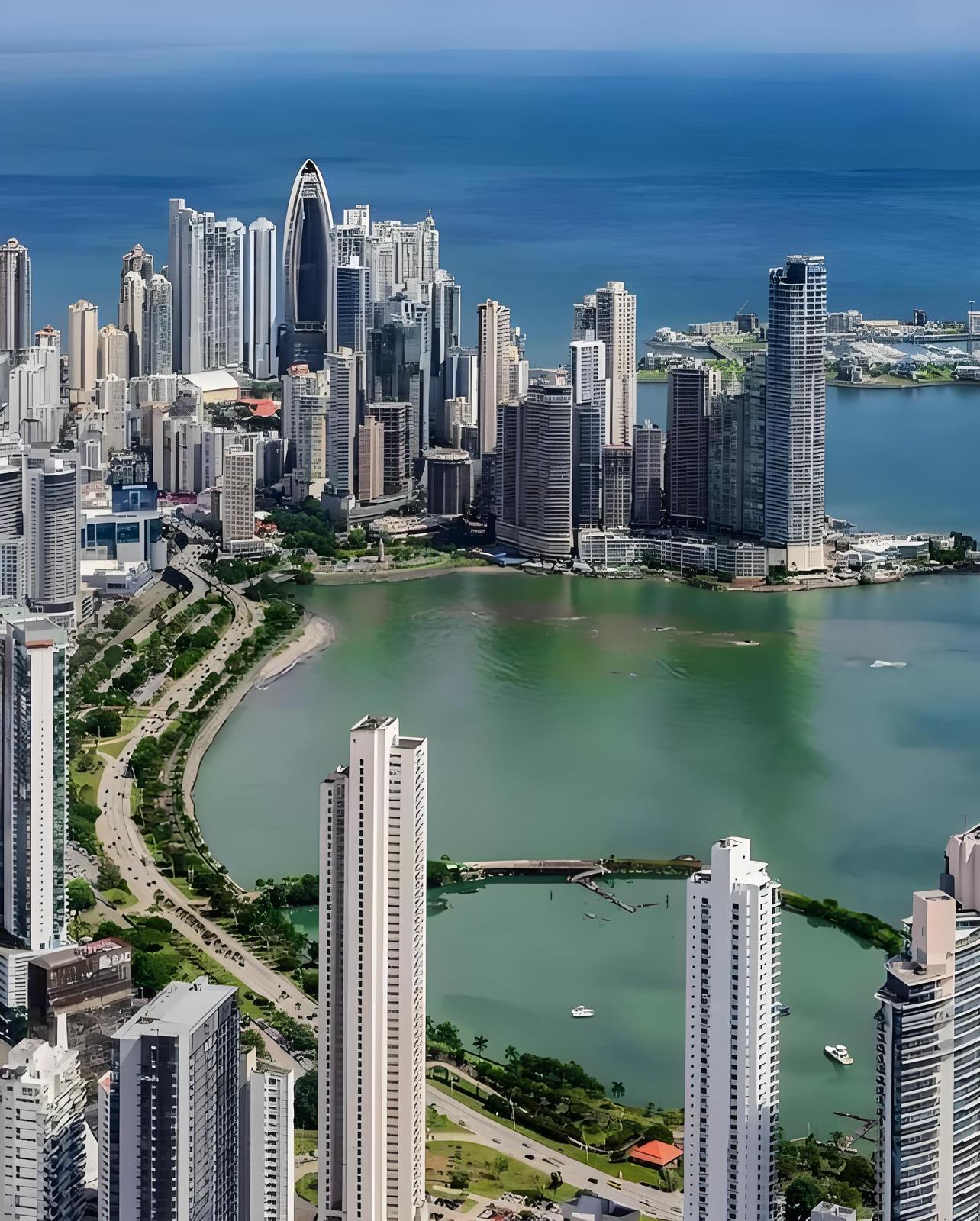
• If you have $300,000 in cash reserves, purchasing property is the preferred option. Properties in Punta Pacifica and Costa del Este are projected to have an average price of $4,000-$6,000 per square meter in 2026. $300,000 could purchase a fully furnished apartment of approximately 70-80 square meters. While the size is not large, holding it long-term can establish a foundation for your family's residency and international education status. If you wish to expand your investment later, you can hold the property for five years, then sell it to recoup your investment and maintain your residency status.
• If short-term liquidity is inconvenient, a bank deposit certificate (minimum $750,000 fixed deposit) can be used to obtain permanent residency over a 5-year period. Although the fixed deposit does not provide actual ownership, it does not require property management, making it suitable for applicants who prefer a fast-paced lifestyle and are not concerned about real estate returns.
• Unplanned taxes and fees for the property: Municipal transaction tax of approximately 1-21 TP3T, public registration fee of approximately 0.5-11 TP3T, legal fees of $40,000-$50,000 (varies by law firm). It is recommended to allow $50,000-$60,000 in additional landing fees.
• Key pitfalls to avoid: Ensure your property has an immigration registration mark (‼️Must read):
When selecting a property, always request the seller to provide official certification or registration number for "immigration-related property." This is the foundation for converting the $300,000 into residency. Properties that are not registered or do not specify their intended use, even if priced over $500,000, will not pass the review.
• Verify title status: Request the lawyer to obtain the electronic title deed (Finca or Propiedad Horizontal) of the corresponding property from the Panama Public Registry to check for any mortgages on construction in progress, co-ownership/seizures, or additional seller liens.
• Asset allocation and tax planning:
Panama operates under a strict territorial tax system: only income earned within Panama is taxed. Overseas income, such as salaries earned abroad, company dividends, or financial investment gains, does not need to be declared to the local tax authorities and will not change tax status.
• Dollarized economies → Investments, rental income, and future sales are all denominated in US dollars, fundamentally eliminating exchange rate risk and protecting the long-term value of assets.
• With no capital gains tax, inheritance tax, or gift tax, Panama is ideal for high-net-worth individuals seeking to pass on their family wealth. A Panamanian passport is recommended as a comprehensive tool for offshore trusts and secure banking gateways.
• Visa differences between friendly countries (important):
• Citizens of mainland China are not eligible for Panama's "Friendly Nation Visa" and must apply through the Qualified Investor Program. The Friendly Nation Visa is currently open to citizens of the United Kingdom, the United States, Japan, Singapore, and most EU member states.
Do not believe any channels offering cheaper visas to friendly countries for mainland Chinese citizens. If such illegal schemes are involved, your immigration status is very likely to be revoked by the immigration authorities.
• Prepare for citizenship planning in advance (low language requirements!):
• Hold permanent residency for 5 years and meet the minimum residency requirement of "landing once every two years" to qualify for the citizenship test and a basic Spanish language assessment. No prior certificate is required; the interviewer will only conduct a conversational level discussion (C1/B2 level is not necessary).
For families planning to stay in the US long-term, they can quickly apply for an E-2 visa at the US consulate in Panama after obtaining their Panamanian passport, without waiting for a processing date, which helps the whole family to stabilize small and medium-sized investments and businesses in the US.
Panama permanent residency application process
1. Initial Assessment and Signing of Authorization Letter (Weeks 0-2): Applicants conduct a self-assessment based on their age and qualifications, and sign a Power of Attorney (POA) with the Panamanian registered immigration lawyer they have appointed to initiate the funding preparation process.
2. Selection of Compliant Properties and Signing of Agreements (Weeks 2-8): Select properties worth over $300,000 that have been registered with the USCIS from the approved list. Sign a purchase contract or letter of intent, including the required down payment and deposit percentage (as agreed by the developer). Electronic documents can be signed in the presence of a notary (no in-person attendance required). Be sure to retain a complete, notarized copy of the purchase contract.
3. Document Preparation and Notarization/Hague Apostille (Weeks 9-14): Prepare supporting documents such as a certificate of no criminal record (valid for 6 months), medical examination report, marriage certificate or birth certificate, etc. These should be notarized by the municipal notary office and then authenticated by the provincial/municipal foreign affairs office and the Panamanian embassy/consulate in advance. All non-Spanish documents must be translated and apostilleed. During the application process, send color scanned PDFs of the original documents to the lawyer for filing in advance. Bring the original documents with you to the country for the visa interview.
4. Complete Investment Payment (Weeks 14-16): Transfer the equivalent of US$300,000 for the purchase price, along with an additional US$50,000 (for taxes and other third-party fees), from your personal offshore account under the same name to the project developer's bank escrow/managed account. It is essential to use a personal account to avoid difficulties in vetting due to corporate payments.
5. Submit the complete permanent residency application to the National Immigration Bureau (within the statutory 2 months): The lawyer will compile the passport, application fee receipt, criminal record check, POA, health certificate, property registration documents (a copy of the official property ownership certificate provided by the developer), and bank transfer receipts, and submit them through the new MICI online system.
6. Background Check and Approval: Approval in Principle (Weeks 18-27): The USCIS completes the background security review and MICI online assessment, which takes approximately 30 business days. Once you receive the approval in principle, immediately prepare for the landing process.
7. Entry Activation and Identity Registration (Entry with a Tourist Visa, Interview, Fingerprint Collection): After prior approval, the applicant and accompanying family members must personally arrive in Panama with a confirmation letter. At the immigration office, they will complete photo taking, fingerprint collection, and formal approval signing, and immediately receive a long-term permanent residency card (valid for 5-10 years) and a Panamanian ID card (Cédula de Residente Permanente). If this step is not completed within 90 days, all previous approvals will automatically become invalid.
8. Subsequent Status Maintenance: To maintain the validity of your permanent residency card and permanent residency status, you must:
• Enter Panama at least once every two years (no limit on the number of days you can stay) to complete the “immigration police check”, and do not leave the country before the two-year deadline to avoid the risk of having your status revoked;
• If you sell your property within 5 years and replace it with a property of the same or higher value, you must promptly report to the immigration authorities to update your registration.
• It is recommended to maintain at least one valid Spanish bank account or utility bill payment receipts each year to provide evidence of legitimate “economic activity” in Panama over the long term.
9. Citizenship (from the end of the 5th year): After meeting the residency requirement of 80 consecutive months of arrival, one can apply for citizenship by submitting a basic Spanish speaking test and a community integration exam. Upon obtaining citizenship, one gains official voting rights and permanent access to over 140 countries through the passport, ultimately achieving national treatment through investment.
Current total processing time: approximately 6-9 months from house selection to obtaining permanent residency.
• Seize the policy dividend window (key milestone in 2026):
Starting in 2026, the approval process for permanent residency through property purchase has been switched to the new digital online approval system of the Panamanian Ministry of Commerce and Industry (MICI). The immigration department's statutory processing time is 30-45 days, and permanent residency cards can be obtained in as little as 3 months.
• Approval data shows that the approval rate of over 96% for Qualified Investor Visas has given first-time applicants a great deal of confidence.
Panama's government plans to increase its monthly processing capacity from 25 to 150 cases by 2026, demonstrating that the lenient and friendly processing time will continue, and applying in advance makes it easier to avoid the risk of long queues.
• Real estate fixed deposit portfolio (4-channel confirmation):
• If you have $300,000 in cash reserves, purchasing property is the preferred option. Properties in Punta Pacifica and Costa del Este are projected to have an average price of $4,000-$6,000 per square meter in 2026. $300,000 could purchase a fully furnished apartment of approximately 70-80 square meters. While the size is not large, holding it long-term can establish a foundation for your family's residency and international education status. If you wish to expand your investment later, you can hold the property for five years, then sell it to recoup your investment and maintain your residency status.
• If short-term liquidity is inconvenient, a bank deposit certificate (minimum $750,000 fixed deposit) can be used to obtain permanent residency over a 5-year period. Although the fixed deposit does not provide actual ownership, it does not require property management, making it suitable for applicants who prefer a fast-paced lifestyle and are not concerned about real estate returns.
• Unplanned taxes and fees for the property: Municipal transaction tax of approximately 1-21 TP3T, public registration fee of approximately 0.5-11 TP3T, legal fees of $40,000-$50,000 (varies by law firm). It is recommended to allow $50,000-$60,000 in additional landing fees.
• Key pitfalls to avoid: Ensure your property has an immigration registration mark (‼️Must read):
When selecting a property, always request the seller to provide official certification or registration number for "immigration-related property." This is the foundation for converting the $300,000 into residency. Properties that are not registered or do not specify their intended use, even if priced over $500,000, will not pass the review.
• Verify title status: Request the lawyer to obtain the electronic title deed (Finca or Propiedad Horizontal) of the corresponding property from the Panama Public Registry to check for any mortgages on construction in progress, co-ownership/seizures, or additional seller liens.
• Asset allocation and tax planning:
Panama operates under a strict territorial tax system: only income earned within Panama is taxed. Overseas income, such as salaries earned abroad, company dividends, or financial investment gains, does not need to be declared to the local tax authorities and will not change tax status.
• Dollarized economies → Investments, rental income, and future sales are all denominated in US dollars, fundamentally eliminating exchange rate risk and protecting the long-term value of assets.
• With no capital gains tax, inheritance tax, or gift tax, Panama is ideal for high-net-worth individuals seeking to pass on their family wealth. A Panamanian passport is recommended as a comprehensive tool for offshore trusts and secure banking gateways.
• Visa differences between friendly countries (important):
• Citizens of mainland China are not eligible for Panama's "Friendly Nation Visa" and must apply through the Qualified Investor Program. The Friendly Nation Visa is currently open to citizens of the United Kingdom, the United States, Japan, Singapore, and most EU member states.
Do not believe any channels offering cheaper visas to friendly countries for mainland Chinese citizens. If such illegal schemes are involved, your immigration status is very likely to be revoked by the immigration authorities.
• Prepare for citizenship planning in advance (low language requirements!):
• Hold permanent residency for 5 years and meet the minimum residency requirement of "landing once every two years" to qualify for the citizenship test and a basic Spanish language assessment. No prior certificate is required; the interviewer will only conduct a conversational level discussion (C1/B2 level is not necessary).
For families planning to stay in the US long-term, they can quickly apply for an E-2 visa at the US consulate in Panama after obtaining their Panamanian passport, without waiting for a processing date, which helps the whole family to stabilize small and medium-sized investments and businesses in the US.
Panama permanent residency application process
1. Initial Assessment and Signing of Authorization Letter (Weeks 0-2): Applicants conduct a self-assessment based on their age and qualifications, and sign a Power of Attorney (POA) with the Panamanian registered immigration lawyer they have appointed to initiate the funding preparation process.
2. Selection of Compliant Properties and Signing of Agreements (Weeks 2-8): Select properties worth over $300,000 that have been registered with the USCIS from the approved list. Sign a purchase contract or letter of intent, including the required down payment and deposit percentage (as agreed by the developer). Electronic documents can be signed in the presence of a notary (no in-person attendance required). Be sure to retain a complete, notarized copy of the purchase contract.
3. Document Preparation and Notarization/Hague Apostille (Weeks 9-14): Prepare supporting documents such as a certificate of no criminal record (valid for 6 months), medical examination report, marriage certificate or birth certificate, etc. These should be notarized by the municipal notary office and then authenticated by the provincial/municipal foreign affairs office and the Panamanian embassy/consulate in advance. All non-Spanish documents must be translated and apostilleed. During the application process, send color scanned PDFs of the original documents to the lawyer for filing in advance. Bring the original documents with you to the country for the visa interview.
4. Complete Investment Payment (Weeks 14-16): Transfer the equivalent of US$300,000 for the purchase price, along with an additional US$50,000 (for taxes and other third-party fees), from your personal offshore account under the same name to the project developer's bank escrow/managed account. It is essential to use a personal account to avoid difficulties in vetting due to corporate payments.
5. Submit the complete permanent residency application to the National Immigration Bureau (within the statutory 2 months): The lawyer will compile the passport, application fee receipt, criminal record check, POA, health certificate, property registration documents (a copy of the official property ownership certificate provided by the developer), and bank transfer receipts, and submit them through the new MICI online system.
6. Background Check and Approval: Approval in Principle (Weeks 18-27): The USCIS completes the background security review and MICI online assessment, which takes approximately 30 business days. Once you receive the approval in principle, immediately prepare for the landing process.
7. Entry Activation and Identity Registration (Entry with a Tourist Visa, Interview, Fingerprint Collection): After prior approval, the applicant and accompanying family members must personally arrive in Panama with a confirmation letter. At the immigration office, they will complete photo taking, fingerprint collection, and formal approval signing, and immediately receive a long-term permanent residency card (valid for 5-10 years) and a Panamanian ID card (Cédula de Residente Permanente). If this step is not completed within 90 days, all previous approvals will automatically become invalid.
8. Subsequent Status Maintenance: To maintain the validity of your permanent residency card and permanent residency status, you must:
• Enter Panama at least once every two years (no limit on the number of days you can stay) to complete the “immigration police check”, and do not leave the country before the two-year deadline to avoid the risk of having your status revoked;
• If you sell your property within 5 years and replace it with a property of the same or higher value, you must promptly report to the immigration authorities to update your registration.
• It is recommended to maintain at least one valid Spanish bank account or utility bill payment receipts each year to provide evidence of legitimate “economic activity” in Panama over the long term.
9. Citizenship (from the end of the 5th year): After meeting the residency requirement of 80 consecutive months of arrival, one can apply for citizenship by submitting a basic Spanish speaking test and a community integration exam. Upon obtaining citizenship, one gains official voting rights and permanent access to over 140 countries through the passport, ultimately achieving national treatment through investment.
Current total processing time: approximately 6-9 months from house selection to obtaining permanent residency.
0 Reviews
Loading reviews...
Unable to load reviews. Please try again later.
No reviews yet. Be the first to write a review!