Buying a castle in the Netherlands
Migration Program Details & Application

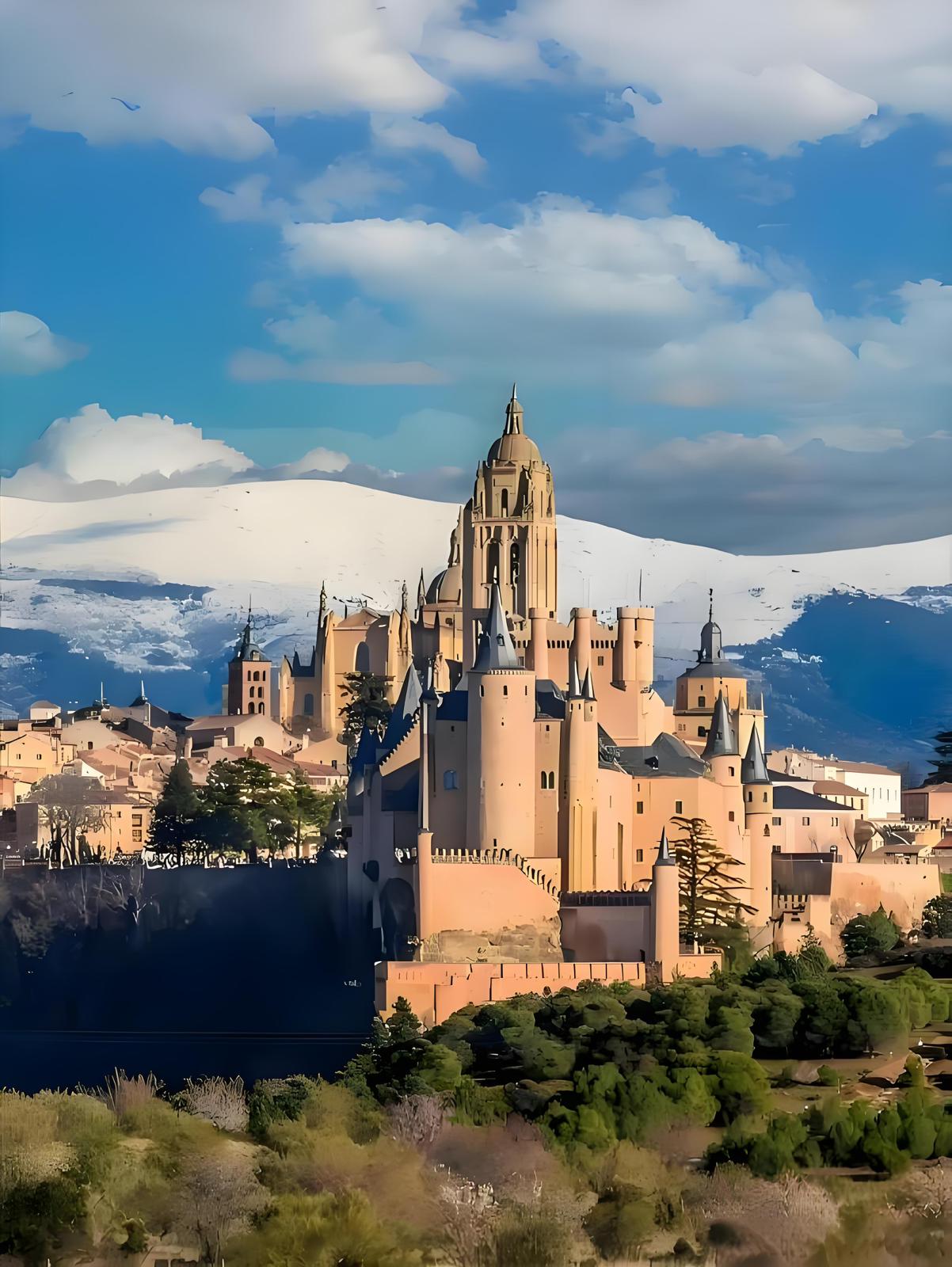

Program Overview
Purchase Dutch Castle
Project Description
I. Core Positioning of the Dutch Castle Market
The Netherlands is renowned for its unique hydraulic engineering, canal system, and low-lying terrain. Its castle architecture exhibits distinct characteristics of a low-lying country—many castles are built around moats, seamlessly integrating with the canal and wetland landscape. Limited by scarce land resources and extremely high population density (approximately 520 people per square kilometer, among the highest in Europe), the total number of castles in the Netherlands ranks after France, Germany, Italy, and the UK. The number circulating in the market is very limited, and large-scale public listings are extremely rare, making castle assets increasingly scarce.
The Dutch real estate market is poised for a strong recovery in 2025, with total investment reaching €13 billion, a year-on-year increase of 151 billion Tb3, exceeding CBRE's initial forecast of €12.5 billion. Market experts point out that demand for high-end luxury homes and historic estates is growing significantly, especially for ultra-luxury properties near nature reserves in the Randstad metropolitan area, which are highly sought after by high-net-worth individuals.
II. Market Supply Patterns – Main Categories of Dutch Castles
First level: Large historical estates and nationally protected buildings (Rijksmonument)
These castles are characterized by their inclusion in the Dutch National Register of Monuments (Rijksmonumenten), strict oversight and maintenance standards by the national heritage management agency, and automatic granting them numerous tax exemptions. Herteveld Estate is a prime example—built in 1635, with a main building of approximately 900 square meters and an attached detached building of approximately 53 square meters, situated within a 5,720 square meter garden landscape. It has applied for and received Natuurschoonwet (NSW) country estate certification, enjoying substantial tax benefits, and is listed at approximately €3.45 million (approximately US$3,455,035) after a price reduction in the autumn of 2025. Furthermore, a group of castles located within a 400-hectare nature reserve in the province of Limburg is currently listed, including Schin op Geul Estate, built in the 13th century and beautifully renovated, priced at approximately €7.23 million (approximately US$7.32 million).
Second Tier: Medium-Sized Operable Castles – Most Attracting International Investors
One of the most sought-after castle types in the current Dutch market is castle assets that are ready for direct commercial operation or awaiting redevelopment. Kasteel Schaesberg, located in Rancheraf, Limburg province, is a castle ruin dating back to 1571, covering 5.5 hectares (approximately 55,970 square meters), and is listed at €480,000 “buyer’s cost (kk)”. This transaction offers a rare gateway opportunity for redevelopment into a cultural and historical tourist destination and event venue. Kasteel Boxbergen, located in North Holland province, comprises approximately 1,300 square meters of main building + 1.1 hectares of land (with an additional 6.7 hectares available for purchase), featuring a round tower and waterfront construction, tapestries, frescoes, and a knights' hall, and is priced at approximately €3.25 million. Another romantic moated castle, Kasteel Schaloen, in the adjacent Limburg province, offers dining, apartments, and hotel facilities, and is priced at €3,995,000 (main castle) + attached hotel offerings. In addition, the Geulzicht Castle Hotel in Limburg province is also available, priced at €2.25 million, and features a park-like garden and tree-lined driveway.
Third tier: Small castles and antique-style houses (most popular with owner-occupier buyers)
The Netherlands boasts both mid-sized replicas of ancient castles and converted manor houses. Case studies show starting prices ranging from €425,000 (such as a castle reported in 2025) to €530,000 (the price of a manor house near Nieuwegein), with larger properties like those on Achterweg-Zuid Road listed at €3.95 million. Landgoed properties in Oirschot, known for their blend of history and nature, attract high-net-worth clients from overseas. Even World War II-era concrete bunkers have entered the speculative market with starting prices as low as €80,000 (no water or electricity, but attracting bids from specific collectors). Dutch castles are priced between €400,000 and €7 million, representing a higher price point suitable for buyers with specific budgets and intended uses.
III. Key Market Developments in 2026
1. The Dutch housing market is generally showing a steady upward trend. In the first quarter of 2025, the overall price of existing homes increased by 10.91 TP3T year-on-year, while the price of new homes increased by 9.31 TP3T year-on-year. Detached houses saw a year-on-year increase of approximately 9.21 TP3T, with Amsterdam at approximately 6.41 TP3T, Groningen reaching 12.91 TP3T, and North Brabant at approximately 11.81 TP3T. High-end detached houses, such as castle-style residences, benefited from both the overall market recovery and scarcity, maintaining their premium prices due to inflows of capital.
2. Historic building maintenance faces a funding gap. Of the more than 63,000 nationally protected buildings, approximately 151 (TP3T) that are not for residential use are showing obvious signs of decay. For example, the Delft Prinsenhof has a €5 million shortfall in its restoration budget. Although the government, municipalities, and private donations have provided €38 million in restoration support, the remaining €5 million gap will not be covered by the government. Castle buyers should note that the maintenance budget will be borne by private funds, and the government will not provide additional subsidies.
3. International investment is recovering strongly, and castle transactions are seen as a primary means of family wealth transfer. Total investment in Dutch real estate is projected to reach €13 billion in 2025, and is expected to continue its rapid growth in 2026. Castles are being viewed as hard assets by both local and overseas buyers.
4. NSW Heritage designation tax benefits attract high-net-worth buyers. Herteveld Estate's NSW designation grants it exemptions from inheritance and gift tax and transfer tax, attracting buyers seeking long-term ownership and tax-free inheritance.
Project Description
I. Core Positioning of the Dutch Castle Market
The Netherlands is renowned for its unique hydraulic engineering, canal system, and low-lying terrain. Its castle architecture exhibits distinct characteristics of a low-lying country—many castles are built around moats, seamlessly integrating with the canal and wetland landscape. Limited by scarce land resources and extremely high population density (approximately 520 people per square kilometer, among the highest in Europe), the total number of castles in the Netherlands ranks after France, Germany, Italy, and the UK. The number circulating in the market is very limited, and large-scale public listings are extremely rare, making castle assets increasingly scarce.
The Dutch real estate market is poised for a strong recovery in 2025, with total investment reaching €13 billion, a year-on-year increase of 151 billion Tb3, exceeding CBRE's initial forecast of €12.5 billion. Market experts point out that demand for high-end luxury homes and historic estates is growing significantly, especially for ultra-luxury properties near nature reserves in the Randstad metropolitan area, which are highly sought after by high-net-worth individuals.
II. Market Supply Patterns – Main Categories of Dutch Castles
First level: Large historical estates and nationally protected buildings (Rijksmonument)
These castles are characterized by their inclusion in the Dutch National Register of Monuments (Rijksmonumenten), strict oversight and maintenance standards by the national heritage management agency, and automatic granting them numerous tax exemptions. Herteveld Estate is a prime example—built in 1635, with a main building of approximately 900 square meters and an attached detached building of approximately 53 square meters, situated within a 5,720 square meter garden landscape. It has applied for and received Natuurschoonwet (NSW) country estate certification, enjoying substantial tax benefits, and is listed at approximately €3.45 million (approximately US$3,455,035) after a price reduction in the autumn of 2025. Furthermore, a group of castles located within a 400-hectare nature reserve in the province of Limburg is currently listed, including Schin op Geul Estate, built in the 13th century and beautifully renovated, priced at approximately €7.23 million (approximately US$7.32 million).
Second Tier: Medium-Sized Operable Castles – Most Attracting International Investors
One of the most sought-after castle types in the current Dutch market is castle assets that are ready for direct commercial operation or awaiting redevelopment. Kasteel Schaesberg, located in Rancheraf, Limburg province, is a castle ruin dating back to 1571, covering 5.5 hectares (approximately 55,970 square meters), and is listed at €480,000 “buyer’s cost (kk)”. This transaction offers a rare gateway opportunity for redevelopment into a cultural and historical tourist destination and event venue. Kasteel Boxbergen, located in North Holland province, comprises approximately 1,300 square meters of main building + 1.1 hectares of land (with an additional 6.7 hectares available for purchase), featuring a round tower and waterfront construction, tapestries, frescoes, and a knights' hall, and is priced at approximately €3.25 million. Another romantic moated castle, Kasteel Schaloen, in the adjacent Limburg province, offers dining, apartments, and hotel facilities, and is priced at €3,995,000 (main castle) + attached hotel offerings. In addition, the Geulzicht Castle Hotel in Limburg province is also available, priced at €2.25 million, and features a park-like garden and tree-lined driveway.
Third tier: Small castles and antique-style houses (most popular with owner-occupier buyers)
The Netherlands boasts both mid-sized replicas of ancient castles and converted manor houses. Case studies show starting prices ranging from €425,000 (such as a castle reported in 2025) to €530,000 (the price of a manor house near Nieuwegein), with larger properties like those on Achterweg-Zuid Road listed at €3.95 million. Landgoed properties in Oirschot, known for their blend of history and nature, attract high-net-worth clients from overseas. Even World War II-era concrete bunkers have entered the speculative market with starting prices as low as €80,000 (no water or electricity, but attracting bids from specific collectors). Dutch castles are priced between €400,000 and €7 million, representing a higher price point suitable for buyers with specific budgets and intended uses.
III. Key Market Developments in 2026
1. The Dutch housing market is generally showing a steady upward trend. In the first quarter of 2025, the overall price of existing homes increased by 10.91 TP3T year-on-year, while the price of new homes increased by 9.31 TP3T year-on-year. Detached houses saw a year-on-year increase of approximately 9.21 TP3T, with Amsterdam at approximately 6.41 TP3T, Groningen reaching 12.91 TP3T, and North Brabant at approximately 11.81 TP3T. High-end detached houses, such as castle-style residences, benefited from both the overall market recovery and scarcity, maintaining their premium prices due to inflows of capital.
2. Historic building maintenance faces a funding gap. Of the more than 63,000 nationally protected buildings, approximately 151 (TP3T) that are not for residential use are showing obvious signs of decay. For example, the Delft Prinsenhof has a €5 million shortfall in its restoration budget. Although the government, municipalities, and private donations have provided €38 million in restoration support, the remaining €5 million gap will not be covered by the government. Castle buyers should note that the maintenance budget will be borne by private funds, and the government will not provide additional subsidies.
3. International investment is recovering strongly, and castle transactions are seen as a primary means of family wealth transfer. Total investment in Dutch real estate is projected to reach €13 billion in 2025, and is expected to continue its rapid growth in 2026. Castles are being viewed as hard assets by both local and overseas buyers.
4. NSW Heritage designation tax benefits attract high-net-worth buyers. Herteveld Estate's NSW designation grants it exemptions from inheritance and gift tax and transfer tax, attracting buyers seeking long-term ownership and tax-free inheritance.
Eligibility & Requirements
Evaluate
I. Advantages
1. Non-EU citizens can, in principle, purchase castles (but must actually hold residency status). Dutch law does not impose nationality-based bans on foreigners purchasing real estate; foreign individuals and companies are free to buy residential and commercial properties. Most purchase restrictions are not based on nationality, but rather on land use and planning. Foreign buyers enjoy the same full property rights and legal protections as Dutch citizens. However, there are practical challenges for non-EU/EEA citizens: they must, in principle, hold a valid residency permit (work permit, family reunification permit, short-term tourist visas are not acceptable) and apply for a BSN from Belastingdienst (Dutch tax authority). Without a BSN, even with funds, a final contract cannot be signed. Therefore, a residency permit is a prerequisite for completing a castle purchase in the Netherlands.
2. Real estate transaction costs and fees are highly transparent, with a clear KK pricing model. "Kosten Koper (KK)" indicates that the buyer must pay additional legal surcharges, typically 4%–6% of the transaction price (including transfer tax, notary fees, registration fees, agency fees, etc.); in the "von" model for newly built or first-time conversions, the seller bears a portion of the cost. The transfer tax for owner-occupied residences is only 2% (exempt if certain youth/first-time buyer conditions are met). The transfer tax for investment rental properties has been reduced from 10.4% to 8% in 2026, which is beneficial for investors converting castles into hotels/Airbnb properties.
3. NSW estate inheritance tax exemption and transfer tax reduction are unique advantages in Europe. Estates and monuments listed in the NSW Register (Natuurschoonwet 1928) are fully or partially exempt from inheritance and gift taxes, and under certain conditions, transfer taxes are exempted. NSW legislation, based on the Natural Persons Protection Act 1928, the Personal Income Tax Act, and the Corporate Income Tax Act, systematically provides tax benefits to owners of historic rural properties. For castles certified by NSW, owners can enjoy multiple property tax exemptions simultaneously during their ownership period.
4. Kadaster's transparent land registry system. Kadaster offers online title search services, allowing anyone to access certificates and view mortgages, easements, seizures, and prohibited purchase types. Kadaster's national-level registration data ensures the decisive legal validity of registration information; completed ownership registration is a prerequisite for obtaining valid property rights. Buyers of castles can conduct thorough background title investigations beforehand, avoiding potential historical claims issues in countries like France and Poland.
5. Estate and gift taxes are completely exempt for NSW-registered castles. The tax exemption for estates listed in the NSW Register is highly attractive. This allows for a smooth intergenerational transfer of family wealth in the form of castles, significantly reducing estate liquidation and tax burdens. In contrast, non-NSW castles are taxed at the regular progressive tax rate.
6. Castles/manors have great potential for diversified commercial conversion. Dutch castles are often used for multi-purpose conversions such as boutique hotels, wedding venues, corporate event centers, cultural exhibition halls, and wineries. Kasteel Schaesberg in Limburg province is being sold as a tourist ceremonial destination, planned as a "vibrant heritage landscape." The scarcity and historical significance of castles contribute to high-premium operations.
II. Major Risks and Costs
1. Residency Requirements for Non-EU/EEA Buyers – This is the biggest hurdle in actually purchasing a Dutch castle. While there are no legal nationality restrictions, non-EU/EEA buyers must hold a valid residence permit (work visa, family reunification, EU Blue Card, etc.) and apply for a Dutch Citizen Service Number (BSN) during the purchase process; otherwise, notaries cannot handle notarization and land registration applications. Therefore, for investors from outside the EU, holding a Dutch residence permit is a legal prerequisite for eligibility to purchase. Many Chinese buyers face difficulties due to not obtaining residency in advance and can only hold the castle assets through a Dutch registered entity (BV) – this leads to complex annual tax filings and opportunity costs subject to foreign investment scrutiny. Short-term Schengen tourist visas do not support any legal property registration procedures.
2. Limited Castle Stock and Choice: There are only a few thousand castles in the entire country, with only a few dozen publicly listed year-round, significantly limiting buyer options. Investable castle assets are scarce and must be strictly matched to their intended use.
3. Historical preservation regulations are extremely strict, and the Rijksmonument has strong binding force. Buildings listed on the national monument list require approval from the cultural heritage authority (Rijksdienst voor het Cultureel Erfgoed) for everything from roof modifications and exterior painting to window replacements. Unauthorized construction not only incurs no tax breaks but also results in orders to restore the original condition and hefty fines. Furthermore, castle repairs must utilize traditional professional materials and techniques, increasing costs by 30%–50%.
4. Renovation and maintenance costs are extremely high with limited subsidies. For castle-like historical sites, restoration requires the use of historical techniques, specialized bricks, lime mortar, etc., causing costs to skyrocket. Kadaster data shows that scaffolding rental alone at Slot Zuylen costs €1,600 per facade per week (scaffolding is stacked on multiple sides). The restoration of the entire castle requires a large amount of traditional material transportation and labor, far exceeding the budget. Many owners are forced to withdraw from the market due to excessive maintenance costs—Dutch castles often suffer from neglect in early maintenance, leading to exponentially increasing costs later. Although municipal grants for the restoration of historical sites can subsidize up to 25% of eligible costs (maximum €10,000, up to €20,000 for castles), this funding is a drop in the bucket compared to the total maintenance budget, and additional government funding for the next ten years has been suspended.
5. Tightening Loan-to-Value Ratio (LTV) and FDI Review. When non-resident, non-EU buyers apply for castle-level mortgage loans in the Netherlands, banks typically require a down payment of 30%–50% and a loan-to-value ratio (LTV) of only 50%–70%. Castles are classified as non-standard assets, slowing down the loan approval process. When foreign ownership is involved, the BV company must disclose beneficial owner information and submit it to the AFM (Australian Financial Markets Authority). Castle assets may be subject to EU and Dutch foreign investment reviews.
6. Remote castles are prone to liquidity traps. If a castle is located in a remote rural area (such as a low-population-density province), the relisting time can be measured in years, requiring a long wait for a suitable buyer. Castles around cities like Amsterdam and Utrecht have a better pool of potential buyers, while castles in other less popular provinces may face low liquidity, with listings taking two to three years or more before a sale.
7. The Property Wealth Tax (Box 3) impacts castles used for investment purposes. If a castle is considered an investment rather than a primary residence, the 2025 wealth tax can be calculated on a basis of 5.881 TP3T of unrealized gross value, with the tax amount equal to 361 TP3T of hypothetical gains. This tax is required annually and is substantial. The tax is exempt for owner-occupiers, but those using the castle as a second home or for business purposes require prior assessment.
I. Advantages
1. Non-EU citizens can, in principle, purchase castles (but must actually hold residency status). Dutch law does not impose nationality-based bans on foreigners purchasing real estate; foreign individuals and companies are free to buy residential and commercial properties. Most purchase restrictions are not based on nationality, but rather on land use and planning. Foreign buyers enjoy the same full property rights and legal protections as Dutch citizens. However, there are practical challenges for non-EU/EEA citizens: they must, in principle, hold a valid residency permit (work permit, family reunification permit, short-term tourist visas are not acceptable) and apply for a BSN from Belastingdienst (Dutch tax authority). Without a BSN, even with funds, a final contract cannot be signed. Therefore, a residency permit is a prerequisite for completing a castle purchase in the Netherlands.
2. Real estate transaction costs and fees are highly transparent, with a clear KK pricing model. "Kosten Koper (KK)" indicates that the buyer must pay additional legal surcharges, typically 4%–6% of the transaction price (including transfer tax, notary fees, registration fees, agency fees, etc.); in the "von" model for newly built or first-time conversions, the seller bears a portion of the cost. The transfer tax for owner-occupied residences is only 2% (exempt if certain youth/first-time buyer conditions are met). The transfer tax for investment rental properties has been reduced from 10.4% to 8% in 2026, which is beneficial for investors converting castles into hotels/Airbnb properties.
3. NSW estate inheritance tax exemption and transfer tax reduction are unique advantages in Europe. Estates and monuments listed in the NSW Register (Natuurschoonwet 1928) are fully or partially exempt from inheritance and gift taxes, and under certain conditions, transfer taxes are exempted. NSW legislation, based on the Natural Persons Protection Act 1928, the Personal Income Tax Act, and the Corporate Income Tax Act, systematically provides tax benefits to owners of historic rural properties. For castles certified by NSW, owners can enjoy multiple property tax exemptions simultaneously during their ownership period.
4. Kadaster's transparent land registry system. Kadaster offers online title search services, allowing anyone to access certificates and view mortgages, easements, seizures, and prohibited purchase types. Kadaster's national-level registration data ensures the decisive legal validity of registration information; completed ownership registration is a prerequisite for obtaining valid property rights. Buyers of castles can conduct thorough background title investigations beforehand, avoiding potential historical claims issues in countries like France and Poland.
5. Estate and gift taxes are completely exempt for NSW-registered castles. The tax exemption for estates listed in the NSW Register is highly attractive. This allows for a smooth intergenerational transfer of family wealth in the form of castles, significantly reducing estate liquidation and tax burdens. In contrast, non-NSW castles are taxed at the regular progressive tax rate.
6. Castles/manors have great potential for diversified commercial conversion. Dutch castles are often used for multi-purpose conversions such as boutique hotels, wedding venues, corporate event centers, cultural exhibition halls, and wineries. Kasteel Schaesberg in Limburg province is being sold as a tourist ceremonial destination, planned as a "vibrant heritage landscape." The scarcity and historical significance of castles contribute to high-premium operations.
II. Major Risks and Costs
1. Residency Requirements for Non-EU/EEA Buyers – This is the biggest hurdle in actually purchasing a Dutch castle. While there are no legal nationality restrictions, non-EU/EEA buyers must hold a valid residence permit (work visa, family reunification, EU Blue Card, etc.) and apply for a Dutch Citizen Service Number (BSN) during the purchase process; otherwise, notaries cannot handle notarization and land registration applications. Therefore, for investors from outside the EU, holding a Dutch residence permit is a legal prerequisite for eligibility to purchase. Many Chinese buyers face difficulties due to not obtaining residency in advance and can only hold the castle assets through a Dutch registered entity (BV) – this leads to complex annual tax filings and opportunity costs subject to foreign investment scrutiny. Short-term Schengen tourist visas do not support any legal property registration procedures.
2. Limited Castle Stock and Choice: There are only a few thousand castles in the entire country, with only a few dozen publicly listed year-round, significantly limiting buyer options. Investable castle assets are scarce and must be strictly matched to their intended use.
3. Historical preservation regulations are extremely strict, and the Rijksmonument has strong binding force. Buildings listed on the national monument list require approval from the cultural heritage authority (Rijksdienst voor het Cultureel Erfgoed) for everything from roof modifications and exterior painting to window replacements. Unauthorized construction not only incurs no tax breaks but also results in orders to restore the original condition and hefty fines. Furthermore, castle repairs must utilize traditional professional materials and techniques, increasing costs by 30%–50%.
4. Renovation and maintenance costs are extremely high with limited subsidies. For castle-like historical sites, restoration requires the use of historical techniques, specialized bricks, lime mortar, etc., causing costs to skyrocket. Kadaster data shows that scaffolding rental alone at Slot Zuylen costs €1,600 per facade per week (scaffolding is stacked on multiple sides). The restoration of the entire castle requires a large amount of traditional material transportation and labor, far exceeding the budget. Many owners are forced to withdraw from the market due to excessive maintenance costs—Dutch castles often suffer from neglect in early maintenance, leading to exponentially increasing costs later. Although municipal grants for the restoration of historical sites can subsidize up to 25% of eligible costs (maximum €10,000, up to €20,000 for castles), this funding is a drop in the bucket compared to the total maintenance budget, and additional government funding for the next ten years has been suspended.
5. Tightening Loan-to-Value Ratio (LTV) and FDI Review. When non-resident, non-EU buyers apply for castle-level mortgage loans in the Netherlands, banks typically require a down payment of 30%–50% and a loan-to-value ratio (LTV) of only 50%–70%. Castles are classified as non-standard assets, slowing down the loan approval process. When foreign ownership is involved, the BV company must disclose beneficial owner information and submit it to the AFM (Australian Financial Markets Authority). Castle assets may be subject to EU and Dutch foreign investment reviews.
6. Remote castles are prone to liquidity traps. If a castle is located in a remote rural area (such as a low-population-density province), the relisting time can be measured in years, requiring a long wait for a suitable buyer. Castles around cities like Amsterdam and Utrecht have a better pool of potential buyers, while castles in other less popular provinces may face low liquidity, with listings taking two to three years or more before a sale.
7. The Property Wealth Tax (Box 3) impacts castles used for investment purposes. If a castle is considered an investment rather than a primary residence, the 2025 wealth tax can be calculated on a basis of 5.881 TP3T of unrealized gross value, with the tax amount equal to 361 TP3T of hypothetical gains. This tax is required annually and is substantial. The tax is exempt for owner-occupiers, but those using the castle as a second home or for business purposes require prior assessment.
Application Process & Advice
suggestion
I. Clearly understand the differences between Dutch castles and those of other countries.
Dimensions include Western European countries such as the Netherlands, France, and Germany, and Central and Eastern European countries such as Poland and the Czech Republic.
Castles are scarce (around a thousand, very few are publicly available); relatively numerous (approximately 20,000 in France, 25,000 in Germany); and relatively numerous (over 5,000 in Poland).
Additional transaction costs: 4%–6% (low); Up to 8%–12% (high); 2%–6% (very low).
Foreign buyer restrictions: Non-EU buyers must have a residence permit (no restrictions, except for Austria/Poland). Polish non-EU buyers require a special permit; Czech Republic has no restrictions.
Inheritance tax benefits: NSW: Complete exemption for historical sites (registration only); France: Conditional exemption (must be open to the public); Italy: 36%–50%; Poland: 0% for direct inheritance.
Tax subsidies are exempt in NSW; heritage subsidies range from €10,000 to €20,000 (lower amount), with significant regional differences and numerous EU funding opportunities.
The advantages of Dutch castles lie in their low transaction costs and inheritance tax exemption, while the disadvantages include the scarcity of castles, residency restrictions for non-EU buyers, and limited funding for renovation subsidies.
Second, be familiar with the Dutch-specific "buyer's cost (kk)" target model.
All castle offers in the Netherlands include a surcharge (KK) by default. Buyers must prepare an additional budget covering 2% transfer tax (for owner-occupied secondhand properties) or 8% (for investment and rental properties from 2026 onwards) + notary fees of €1,000–€2,000 + land registration fees + agent fees, etc., totaling 4%–6%. In comparison, the combined French and British options have even higher surcharges.
3. Ensure your BSN is pre-screened and you obtain a residence permit.
Non-EU buyers applying for a BSN must present a valid residence permit (work or family reunification permit, not a short-term tourist visa) at the tax office; a BSN is a prerequisite for signing a notarized deed and registering the land. EU/EEA citizens do not have this requirement and can apply for a BSN directly with their passports. If a residence permit cannot be obtained, the only option is to establish a BV entity in the Netherlands to hold the castle, but this involves complexity and increased tax costs due to the FDI background. It is strongly recommended that non-EU buyers prioritize obtaining legal residency or consult a professional international lawyer for an assessment of their options.
IV. Effectively utilize the inheritance tax exemption and transfer tax concessions granted by NSW heritage status.
To apply for NSW certification, a castle must meet statutory requirements regarding openness of use, conservation conditions, and heritage value. If a castle qualifies for NSW certification, the application should be submitted as early as possible to obtain full or partial exemption from estate gift and transfer taxes. Herteveld Estate enjoys significant tax benefits from NSW certification.
V. Assemble a professional team
The Dutch castle transaction requires the following roles:
• Dutch Notaris (Civil Law Notaries): A legally binding role responsible for contract signing authentication, Kadaster registration, and anti-money laundering audits;
• Buyer's real estate agent (Aankoopmakelaar): Assists with negotiation and due diligence, familiar with the intricacies of the castle;
• Rijksmonument cultural heritage experts: guide the national approval process for the renovation of monuments, ensuring that restorations do not violate monument protection strategies;
• Tax advisor (Belasting advisor): Assists with utilizing NSW exemptions and wealth tax adjustments;
• Banks or loan advisors: Non-EU residents need to submit a full declaration to obtain pre-approval for a loan.
VI. Application for Simplified Estate Transfer by Natuurschoonwet
If the goal is family wealth transfer and estate tax avoidance, NSW registration should be applied for as soon as possible after purchase. NSW certification approval conditions may change in 2026, requiring advance guidance from a tax officer.
Purchase process of Dutch castle
Dutch real estate transactions strictly adhere to a dual system of "notary contracts + Kadaster registration." Property ownership is considered complete upon registration with Kadaster. While the entire process is not mandatory, it requires close involvement from notaries and lawyers at every step. This process differs significantly from that of France and the UK—there are differences in the required documentation and eligibility thresholds for EU citizens and non-EU citizens.
Phase 1: Funding preparation, residency and BSN application (4–10 weeks)
• EU/EEA citizens can apply for a BSN directly from the tax office (Belastingdienst) with their passport;
Non-EU citizens must first obtain a valid residence permit (residence certificate) and then apply for a BSN from the tax authorities.
• Determine the total budget (purchase price + additional transaction fees approximately 4%–6% + renovation budget);
• Contact the buyer's agent (Aankoopmakelaar) and a notary public, and select a bank or loan broker in advance.
Phase Two: Property Due Diligence and Castle Search (2–8 months)
Order a title deed (Kadaster certificate) from Kadaster (the land registry). Verify the legal ownership of the property and check for any mortgages, easements, or seizures.
• Look for castle listings through the Funda platform or high-end agents; most castles are listed for sale by NVM member agents or professional country estate departments.
• Ensure that the land is not a sensitive protected area or a military-controlled area.
Phase Three: Quotation and Signing of Appointment Agreement (Koopovereenkomst) (if applicable)
• The buyer submits a written offer through an agent and proceeds to negotiations depending on the seller's acceptance of it;
• Both parties sign a provisional "reservation agreement" which stipulates the responsibilities of both parties, the transaction price, the deposit (usually 10%–15%), the conditions, and the due diligence period;
The deposit is held in escrow by a notary public and must be returned double if the seller defaults.
Acquisition conditions typically include loan approval and historical site inspection. For castles, a longer due diligence period is usually agreed upon (30–90 days).
Phase Four: Final Contract Signing and Notarization
• Both parties sign a formal purchase agreement (akte van levering) in the notary's office; this step becomes effective after an anti-money laundering check.
• The buyer pays the remaining funds (transferred from the BSN account), and the notary will hold the purchase price in escrow, deducting transfer taxes and other payments on their behalf;
EU citizens only need a passport and BSN; non-EU citizens also need a residence permit and proof of funds.
Phase 5: Kadaster Ownership Registration (approximately 2–4 weeks)
• The notary public submits the formal deed to Kadaster, and the buyer is registered as the new legal owner;
Ownership is only formally transferred legally after registration is completed;
• Obtain the Kadaster title certificate as final proof of ownership.
Phase 6: Key Handover and Completion
• On the handover date (usually after final registration), the seller hands over the vacant castle and keys;
• The buyer signs the receipt record.
Overall Time Frame
Estimated time for each stage
Funds preparation + BSN + Residence Permit/Loan pre-approval: 6–14 weeks
Search for castles + due diligence 3–9 months (castle listings are scarce)
Signing of appointment agreement + condition verification (2-4 weeks)
Final notarization and signing take 1–2 weeks
Kadaster registration takes 2–4 weeks.
Key delivery and completion in 1–2 weeks
From the initial offer to completion, EU buyers typically spend about 5–8 months; non-EU buyers need to obtain a residence permit in advance, and the total time may be as long as 12–18 months or even longer, with the residence permit being the biggest time variable.
I. Clearly understand the differences between Dutch castles and those of other countries.
Dimensions include Western European countries such as the Netherlands, France, and Germany, and Central and Eastern European countries such as Poland and the Czech Republic.
Castles are scarce (around a thousand, very few are publicly available); relatively numerous (approximately 20,000 in France, 25,000 in Germany); and relatively numerous (over 5,000 in Poland).
Additional transaction costs: 4%–6% (low); Up to 8%–12% (high); 2%–6% (very low).
Foreign buyer restrictions: Non-EU buyers must have a residence permit (no restrictions, except for Austria/Poland). Polish non-EU buyers require a special permit; Czech Republic has no restrictions.
Inheritance tax benefits: NSW: Complete exemption for historical sites (registration only); France: Conditional exemption (must be open to the public); Italy: 36%–50%; Poland: 0% for direct inheritance.
Tax subsidies are exempt in NSW; heritage subsidies range from €10,000 to €20,000 (lower amount), with significant regional differences and numerous EU funding opportunities.
The advantages of Dutch castles lie in their low transaction costs and inheritance tax exemption, while the disadvantages include the scarcity of castles, residency restrictions for non-EU buyers, and limited funding for renovation subsidies.
Second, be familiar with the Dutch-specific "buyer's cost (kk)" target model.
All castle offers in the Netherlands include a surcharge (KK) by default. Buyers must prepare an additional budget covering 2% transfer tax (for owner-occupied secondhand properties) or 8% (for investment and rental properties from 2026 onwards) + notary fees of €1,000–€2,000 + land registration fees + agent fees, etc., totaling 4%–6%. In comparison, the combined French and British options have even higher surcharges.
3. Ensure your BSN is pre-screened and you obtain a residence permit.
Non-EU buyers applying for a BSN must present a valid residence permit (work or family reunification permit, not a short-term tourist visa) at the tax office; a BSN is a prerequisite for signing a notarized deed and registering the land. EU/EEA citizens do not have this requirement and can apply for a BSN directly with their passports. If a residence permit cannot be obtained, the only option is to establish a BV entity in the Netherlands to hold the castle, but this involves complexity and increased tax costs due to the FDI background. It is strongly recommended that non-EU buyers prioritize obtaining legal residency or consult a professional international lawyer for an assessment of their options.
IV. Effectively utilize the inheritance tax exemption and transfer tax concessions granted by NSW heritage status.
To apply for NSW certification, a castle must meet statutory requirements regarding openness of use, conservation conditions, and heritage value. If a castle qualifies for NSW certification, the application should be submitted as early as possible to obtain full or partial exemption from estate gift and transfer taxes. Herteveld Estate enjoys significant tax benefits from NSW certification.
V. Assemble a professional team
The Dutch castle transaction requires the following roles:
• Dutch Notaris (Civil Law Notaries): A legally binding role responsible for contract signing authentication, Kadaster registration, and anti-money laundering audits;
• Buyer's real estate agent (Aankoopmakelaar): Assists with negotiation and due diligence, familiar with the intricacies of the castle;
• Rijksmonument cultural heritage experts: guide the national approval process for the renovation of monuments, ensuring that restorations do not violate monument protection strategies;
• Tax advisor (Belasting advisor): Assists with utilizing NSW exemptions and wealth tax adjustments;
• Banks or loan advisors: Non-EU residents need to submit a full declaration to obtain pre-approval for a loan.
VI. Application for Simplified Estate Transfer by Natuurschoonwet
If the goal is family wealth transfer and estate tax avoidance, NSW registration should be applied for as soon as possible after purchase. NSW certification approval conditions may change in 2026, requiring advance guidance from a tax officer.
Purchase process of Dutch castle
Dutch real estate transactions strictly adhere to a dual system of "notary contracts + Kadaster registration." Property ownership is considered complete upon registration with Kadaster. While the entire process is not mandatory, it requires close involvement from notaries and lawyers at every step. This process differs significantly from that of France and the UK—there are differences in the required documentation and eligibility thresholds for EU citizens and non-EU citizens.
Phase 1: Funding preparation, residency and BSN application (4–10 weeks)
• EU/EEA citizens can apply for a BSN directly from the tax office (Belastingdienst) with their passport;
Non-EU citizens must first obtain a valid residence permit (residence certificate) and then apply for a BSN from the tax authorities.
• Determine the total budget (purchase price + additional transaction fees approximately 4%–6% + renovation budget);
• Contact the buyer's agent (Aankoopmakelaar) and a notary public, and select a bank or loan broker in advance.
Phase Two: Property Due Diligence and Castle Search (2–8 months)
Order a title deed (Kadaster certificate) from Kadaster (the land registry). Verify the legal ownership of the property and check for any mortgages, easements, or seizures.
• Look for castle listings through the Funda platform or high-end agents; most castles are listed for sale by NVM member agents or professional country estate departments.
• Ensure that the land is not a sensitive protected area or a military-controlled area.
Phase Three: Quotation and Signing of Appointment Agreement (Koopovereenkomst) (if applicable)
• The buyer submits a written offer through an agent and proceeds to negotiations depending on the seller's acceptance of it;
• Both parties sign a provisional "reservation agreement" which stipulates the responsibilities of both parties, the transaction price, the deposit (usually 10%–15%), the conditions, and the due diligence period;
The deposit is held in escrow by a notary public and must be returned double if the seller defaults.
Acquisition conditions typically include loan approval and historical site inspection. For castles, a longer due diligence period is usually agreed upon (30–90 days).
Phase Four: Final Contract Signing and Notarization
• Both parties sign a formal purchase agreement (akte van levering) in the notary's office; this step becomes effective after an anti-money laundering check.
• The buyer pays the remaining funds (transferred from the BSN account), and the notary will hold the purchase price in escrow, deducting transfer taxes and other payments on their behalf;
EU citizens only need a passport and BSN; non-EU citizens also need a residence permit and proof of funds.
Phase 5: Kadaster Ownership Registration (approximately 2–4 weeks)
• The notary public submits the formal deed to Kadaster, and the buyer is registered as the new legal owner;
Ownership is only formally transferred legally after registration is completed;
• Obtain the Kadaster title certificate as final proof of ownership.
Phase 6: Key Handover and Completion
• On the handover date (usually after final registration), the seller hands over the vacant castle and keys;
• The buyer signs the receipt record.
Overall Time Frame
Estimated time for each stage
Funds preparation + BSN + Residence Permit/Loan pre-approval: 6–14 weeks
Search for castles + due diligence 3–9 months (castle listings are scarce)
Signing of appointment agreement + condition verification (2-4 weeks)
Final notarization and signing take 1–2 weeks
Kadaster registration takes 2–4 weeks.
Key delivery and completion in 1–2 weeks
From the initial offer to completion, EU buyers typically spend about 5–8 months; non-EU buyers need to obtain a residence permit in advance, and the total time may be as long as 12–18 months or even longer, with the residence permit being the biggest time variable.